Unveiling the Truth: Does Laser Hair Removal Work? A Deep Dive into Efficacy and Expectations
For anyone tired of the endless cycle of shaving, waxing, and plucking, the promise of permanent hair reduction can sound almost too good to be true.
Laser hair removal has been hailed as a revolutionary solution, offering the allure of smooth, hair-free skin with long-lasting results. But amidst the glowing testimonials and persuasive marketing, a fundamental question often arises: does laser hair removal actually work?
The answer, for the vast majority of individuals, is a resounding yes. However, understanding how and why it works, what to expect, and its limitations is crucial for managing expectations and achieving satisfactory outcomes.
This article will demystify the science, explore the factors influencing its effectiveness, and provide a comprehensive overview of what makes laser hair removal a highly sought-after and often life-changing cosmetic procedure.
The Science Behind the Smooth: How Laser Hair Removal Targets Hair
To truly grasp whether laser hair removal works, it’s essential to understand its underlying mechanism. The procedure is based on the principle of selective photothermolysis, which means using light (photo) to heat (thermo) and destroy specific targets (lysis) without harming the surrounding tissue.
- Melanin as the Target: The primary target in hair removal is melanin, the pigment that gives hair its color. Darker hairs contain more melanin, making them excellent targets for the laser.
- Light Absorption and Heat Conversion: A laser device emits a highly concentrated beam of light at a specific wavelength. When this light penetrates the skin, it is preferentially absorbed by the melanin in the hair shaft and follicle. This absorbed light energy is then converted into heat.
- Follicle Damage: The intense heat travels down the hair shaft, effectively damaging the germinative cells within the hair follicle that are responsible for hair growth. This damage impairs the follicle’s ability to produce new hair.
- Hair Growth Cycles: Hair grows in three distinct phases:
- Anagen (Active Growth): The hair is actively growing and deeply connected to the follicle, rich in melanin. This is the optimal phase for laser treatment.
- Catagen (Transition): Hair growth slows, and the follicle shrinks.
- Telogen (Resting): The hair is dormant and eventually sheds.Since only a fraction of hairs are in the anagen phase at any given time, multiple treatment sessions are necessary to target all hairs as they cycle through their active growth phase. This is why you need a series of treatments, not just one.
By repeatedly targeting hair follicles during their anagen phase, laser hair removal progressively reduces hair growth, leading to thinner, sparser, and eventually, absent hair in the treated areas.
Why Laser Hair Removal Works (and For Whom It Works Best)
The effectiveness of laser hair removal is not universal across all individuals. Several factors play a critical role in determining the success rate:
1. Hair Color and Skin Type
- Dark Hair, Light Skin: This is the ideal combination for most traditional laser systems. The stark contrast between dark melanin in the hair and lighter melanin in the skin allows the laser to precisely target the hair follicle without excessively heating the surrounding skin.
- Dark Hair, Darker Skin: Historically, laser hair removal was challenging for darker skin tones due to the risk of hyperpigmentation or burns. However, advancements in technology, particularly Nd:YAG lasers, can safely and effectively treat darker skin by using longer wavelengths that bypass the superficial melanin in the skin and target the deeper pigment in the follicle.
- Light Hair (Blonde, Grey, White): Laser hair removal is generally less effective or ineffective for very light-colored hair because these hairs lack sufficient melanin for the laser to absorb. The laser has no pigment to target.
- Red Hair: Red hair contains a different type of melanin (pheomelanin) that is also not effectively absorbed by most laser wavelengths, making treatment less successful.
2. Hair Thickness and Density
Thicker, coarser hairs tend to respond better to laser treatment than fine vellus hair, as they contain more melanin and provide a better conduit for heat transfer to the follicle.
3. Hormonal Factors
Hormonal imbalances (e.g., PCOS, thyroid disorders) can stimulate new hair growth, potentially requiring more sessions or maintenance treatments. Certain areas, like the face in women, are often more hormonally driven and might require more frequent touch-ups.
4. Number of Sessions
As discussed, multiple sessions are non-negotiable for achieving optimal results. Most individuals require 6-8 sessions, sometimes more, spaced 4-8 weeks apart, to catch all hairs in their active growth phase. Consistency is key.
5. Laser Technology and Expertise of the Practitioner
The type of laser used (Alexandrite, Diode, Nd:YAG) and the skill of the technician (correct settings for skin type, hair color, and energy levels) significantly impact the efficacy and safety of the treatment. Reputable clinics use FDA-cleared devices and employ certified, experienced professionals.
What to Expect: Realistic Outcomes
When asking, “does laser hair removal work?” it’s important to clarify what “work” means.
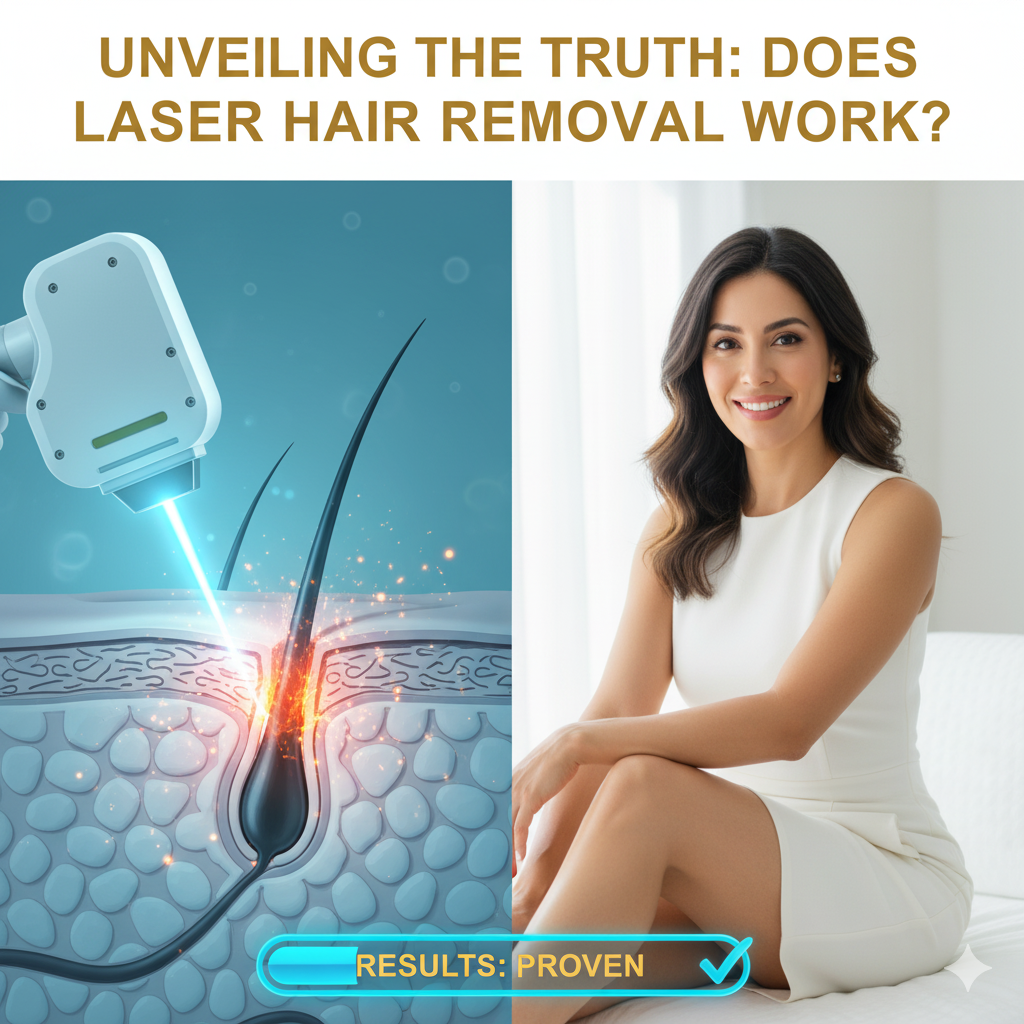
It’s more accurately described as permanent hair reduction rather than permanent hair removal for every single hair.
- Significant Reduction: Most individuals experience a significant reduction in hair growth—often 70-90% or more—after completing a full series of treatments. The remaining hair will typically be much finer, lighter, and sparser.
- Permanent Results for Damaged Follicles: The hair follicles that are permanently damaged by the laser will not regrow hair.
- Maintenance Sessions: Some individuals may require occasional touch-up sessions (e.g., once a year) to address any new hair growth or dormant follicles that become active over time. Hormonal changes, medication, or genetic predispositions can sometimes trigger new growth.
- Improved Skin Quality: Beyond hair reduction, many clients notice improved skin texture, fewer ingrown hairs, and less irritation from traditional hair removal methods.
The Process: From Consultation to Smooth Skin
For laser hair removal to work effectively, following the proper protocol is essential:
1. Initial Consultation
A thorough assessment of your skin type, hair color, medical history, and treatment goals will determine if you are a suitable candidate and which laser type is best for you.
2. Pre-Treatment Preparation
- Avoid Sun Exposure: Tanned skin increases the risk of side effects.
- No Waxing/Plucking: These methods remove the hair root, which the laser needs to target. Shaving is permitted and encouraged 24 hours before treatment.
- Avoid Certain Medications: Some medications can increase photosensitivity.
3. During Treatment
The technician uses a handheld device to deliver laser pulses. You may feel a sensation likened to a rubber band snap or a warm prickling. Most modern lasers include cooling mechanisms for comfort.
4. Post-Treatment Care
- Mild Redness/Swelling: Normal and typically resolves within a day.
- Sun Protection: Crucial to protect treated skin from UV exposure.
- Hair Shedding: Treated hairs will shed over 1-3 weeks.
5. Consistency of Sessions
Adhering to the recommended treatment schedule (typically 4-8 weeks apart) is vital for targeting hair in the anagen phase and ensuring maximum efficacy. Missing sessions can reduce the overall effectiveness.
Addressing Common Misconceptions
Despite its widespread use, some myths about laser hair removal persist:
- Myth: It’s a one-time treatment.
- Reality: Due to hair growth cycles, multiple sessions are always required.
- Myth: It’s painful.
- Reality: While sensations vary, most describe it as tolerable discomfort, often less painful than waxing. Modern lasers have advanced cooling systems to minimize discomfort.
- Myth: It’s unsafe or causes cancer.
- Reality: FDA-cleared lasers are safe. They use non-ionizing radiation, meaning they don’t cause cellular mutations like X-rays. The light primarily targets the hair follicle, not internal organs.
- Myth: It works on all hair colors.
- Reality: It’s most effective on dark, coarse hair. Light, red, or gray hair typically does not respond well.
The Verdict: A Transformative Solution
So, does laser hair removal work? Absolutely. For suitable candidates, it is a highly effective, safe, and long-lasting solution for reducing unwanted body and facial hair. It offers significantly more permanent results than temporary methods and, for many, provides a considerable boost in confidence and quality of life.
However, success hinges on realistic expectations, understanding the science, choosing a qualified practitioner with appropriate technology, and committing to the full course of treatments.
When these elements align, laser hair removal stands as one of the most transformative and satisfying cosmetic procedures available today, truly delivering on its promise of smoother, worry-free skin.
Recent Posts
- The Ultimate Showdown: Electrolysis vs. Laser Hair Removal – Which is the Right Choice for You?
- Your Digital Pathway to Fitness Expertise: The Definitive Guide to Personal Training Certification Online
- Redefining Confidence: Your Comprehensive Guide to Breast Augmentation Houston
- Beyond the Garden State Glow: Your Definitive Guide to Laser Hair Removal in NJ
- San Diego Sunshine: Your Guide to Laser Hair Removal San Diego and Effortless Beach-Ready Skin
Recent Comments
