Unveiling Perfection: Finding the Best Laser Hair Removal for Your Unique Needs
The quest for perpetually smooth, hair-free skin has led countless individuals to the doors of aesthetic clinics, seeking a lasting alternative to the endless cycle of shaving, waxing, and plucking.
Among the myriad of options, laser hair removal stands out as the most effective and widely acclaimed method for long-term hair reduction. But with a rapidly evolving landscape of technology and a multitude of providers, a critical question emerges: how do you find the best laser hair removal treatment and provider for you?
The answer isn’t a one-size-fits-all solution. What constitutes the “best” depends heavily on individual factors such as skin type, hair color, treatment area, and personal priorities regarding cost, comfort, and clinic reputation.
This comprehensive guide will navigate the complexities of laser hair removal, exploring the leading technologies, essential considerations for choosing a provider, and what truly defines an optimal experience to help you make the most informed decision possible.
The Evolution of Excellence: Understanding Laser Hair Removal Technology
The effectiveness of laser hair removal hinges significantly on the technology employed. Decades of innovation have led to several distinct types of lasers, each with its unique strengths and ideal applications. Understanding these differences is the first step in identifying the best laser hair removal option for your specific profile.
1. Alexandrite Laser (755 nm)
- Strengths: Often considered the gold standard for individuals with fair to olive skin tones (Fitzpatrick skin types I-III) and dark, fine to medium-thick hair. It boasts a fast repetition rate, making it efficient for treating larger body areas quickly.
- How it works: Its shorter wavelength is highly absorbed by melanin, making it very effective for targeting pigment in the hair follicle.
- Limitations: Due to its high melanin absorption, it carries a higher risk of hyperpigmentation (dark spots) or burns on darker skin tones.
2. Diode Laser (800-810 nm)
- Strengths: Versatile and effective for a wide range of skin types, from fair to moderately dark (Fitzpatrick skin types I-V), and most hair colors (excluding very light or red). Many modern diode lasers incorporate advanced cooling systems, enhancing patient comfort.
- How it works: Its medium wavelength allows deeper penetration into the hair follicle, reducing epidermal absorption and minimizing damage to surface skin, making it safer for slightly darker skin.
- Limitations: May require more sessions for optimal results compared to Alexandrite on very light skin, or Nd:YAG on very dark skin.
3. Nd:YAG Laser (1064 nm)
- Strengths: The safest and most effective option for individuals with dark to very dark skin tones (Fitzpatrick skin types IV-VI), and tanned skin. Its longer wavelength allows it to bypass the epidermal melanin, targeting the deeper hair follicle with minimal risk of burns or pigmentation changes. Also effective for deeper hair follicles, such as those in the back or bikini area.
- How it works: The longer wavelength is less absorbed by melanin in the epidermis but is effectively absorbed by the melanin in the hair follicle, reaching deeper structures.
- Limitations: May be slightly less effective on very fine or light-colored hair, and some patients report it being marginally more uncomfortable than other lasers, although this is often mitigated by advanced cooling.
4. IPL (Intense Pulsed Light)
- Note: While often grouped with lasers, IPL is technically not a laser. It uses a broad spectrum of light wavelengths, unlike a laser’s single, focused wavelength.
- Strengths: Can be effective for some individuals with light skin and dark hair. It is often more affordable per session than true laser treatments.
- Limitations: Generally less precise, less powerful, and requires more sessions than true lasers. It carries a higher risk of side effects on darker skin tones due to the broad light spectrum. Often, it provides hair reduction rather than long-term hair removal.
When searching for the best laser hair removal, a reputable clinic will have a variety of these FDA-cleared technologies to cater to diverse client needs.
Beyond the Beam: Crucial Factors for the Best Laser Hair Removal Experience
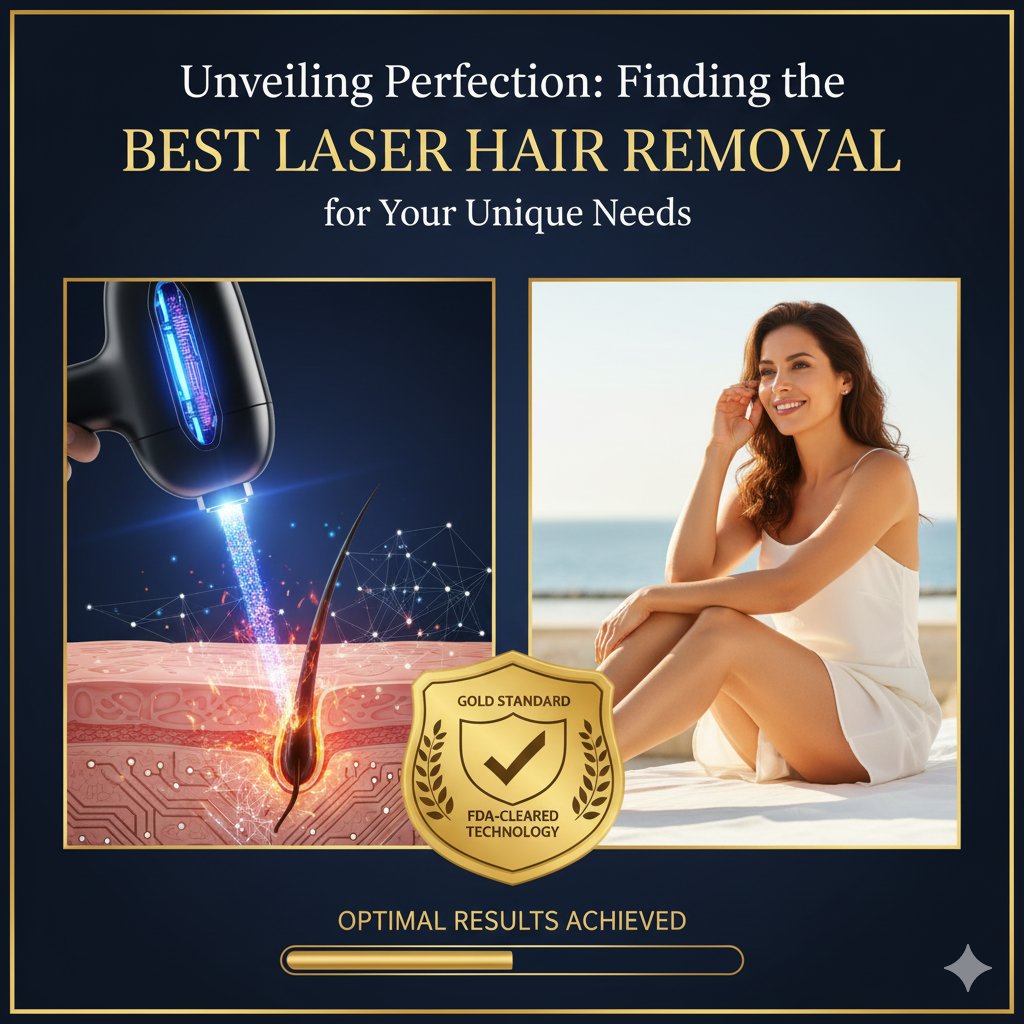
While advanced technology is foundational, the laser itself is only one component of a truly excellent laser hair removal experience. Several other factors are equally vital for safety, efficacy, and overall satisfaction.
1. The Practitioner’s Expertise and Credentials
This is arguably the most critical factor. The best laser hair removal is performed by highly trained and experienced professionals. Look for:
- Certified Laser Technicians/Registered Nurses: These individuals should have specific training and certification in laser safety and operation.
- Medical Supervision: The clinic should operate under the direct oversight of a licensed physician (Dermatologist or Plastic Surgeon). This ensures medical expertise is available for consultations, complications, and setting appropriate protocols.
- Experience: An experienced practitioner knows how to accurately assess skin and hair types, choose the optimal laser settings, recognize potential adverse reactions, and adjust treatments as needed.
2. Comprehensive Consultation and Patch Test
A truly excellent clinic will always prioritize a thorough initial consultation. This should include:
- Detailed Assessment: Evaluation of your skin type (using the Fitzpatrick scale), hair color, texture, and density. Discussion of your medical history, including any medications, hormonal conditions, or skin sensitivities.
- Realistic Expectations: An honest discussion about expected results, the number of sessions required, and potential side effects.
- Patch Test: Performing a small test patch on the treatment area is crucial. This allows the practitioner to determine the ideal laser settings for your skin’s unique reaction before treating a larger area, minimizing risks.
3. Clinic Reputation and Safety Protocols
The environment in which you receive treatment significantly impacts the quality and safety of your experience.
- FDA-Cleared Equipment: Ensure the clinic uses reputable, FDA-cleared laser devices, not generic or unverified machines.
- Hygiene and Cleanliness: A clean, sterile environment is paramount in any medical or aesthetic setting.
- Positive Reviews and Testimonials: Look for consistent positive feedback from previous clients regarding safety, results, and customer service.
- Transparency: A good clinic will be transparent about pricing, potential risks, and their safety procedures.
4. Personalized Treatment Plan
The best laser hair removal is never a one-size-fits-all approach. Your treatment plan should be tailored to you, including:
- Specific Laser Choice: Based on your skin and hair type.
- Number of Sessions: Customized to the area being treated and your individual response.
- Session Intervals: Optimized to target hair during its active growth phase.
- Pre- and Post-Care Instructions: Clear, detailed instructions to maximize results and minimize risks.
Preparing for Success: Maximizing Your Results
Even with the best laser hair removal technology and technician, your adherence to pre- and post-treatment guidelines is vital for achieving optimal and safe results.
Before Treatment:
- Avoid Sun Exposure: This is non-negotiable. Tanned skin significantly increases the risk of burns and pigmentation changes. Avoid sun exposure, tanning beds, and self-tanners for at least 4-6 weeks prior to your session.
- Shave the Area: Shave the treatment area 24 hours before your appointment. The laser needs the hair follicle to be present but no surface hair to burn.
- No Plucking/Waxing: Avoid these methods for 4-6 weeks before treatment, as they remove the hair root that the laser targets.
- Clean Skin: Ensure the area is free of lotions, creams, deodorants, or makeup.
- Avoid Photosensitizing Medications: Inform your practitioner of any medications you are taking, as some can increase skin’s sensitivity to light.
After Treatment:
- Sun Protection: Continue to rigorously protect the treated area from the sun with high-SPF sunscreen and protective clothing.
- Avoid Heat: For 24-48 hours, steer clear of hot showers, saunas, steam rooms, and strenuous exercise to prevent irritation.
- Gentle Skin Care: Use mild cleansers and moisturizers. Avoid harsh exfoliants, retinoids, or AHAs until your skin has fully recovered.
- Expect Shedding: Hairs will gradually shed over 1-3 weeks post-treatment. Do not pick or pull them out; let them fall naturally.
The Verdict: Defining Your Best Laser Hair Removal Experience
The journey to find the best laser hair removal is personal. It involves a synergy of advanced, appropriate technology, the profound expertise of your practitioner, a rigorous commitment to safety protocols, and your diligent adherence to pre- and post-care instructions.
By prioritizing these factors, you move beyond merely receiving a laser treatment; you invest in a tailored, safe, and highly effective experience that delivers on the promise of beautifully smooth, hair-free skin.
Do your research, ask probing questions, and choose a provider who inspires confidence. Your optimal hair removal solution awaits, ready to transform your routine and enhance your confidence for years to come.
Recent Posts
- The Ultimate Showdown: Electrolysis vs. Laser Hair Removal – Which is the Right Choice for You?
- Your Digital Pathway to Fitness Expertise: The Definitive Guide to Personal Training Certification Online
- Redefining Confidence: Your Comprehensive Guide to Breast Augmentation Houston
- Beyond the Garden State Glow: Your Definitive Guide to Laser Hair Removal in NJ
- San Diego Sunshine: Your Guide to Laser Hair Removal San Diego and Effortless Beach-Ready Skin
Recent Comments
