The Ultimate Showdown: Electrolysis vs. Laser Hair Removal – Which is the Right Choice for You?
For anyone seeking a long-term solution to unwanted hair, the market presents two dominant and highly effective options: electrolysis and laser hair removal. While both methods promise to free you from the endless cycle of shaving and waxing, they achieve this goal through fundamentally different mechanisms, and each comes with its own set of pros, cons, and ideal candidates.
The choice between them isn’t about which one is inherently “better,” but rather which one is the best fit for your unique hair, skin, and long-term goals.
This comprehensive guide will serve as your definitive comparison, breaking down the science, efficacy, comfort levels, and costs of electrolysis vs. laser hair removal. By the end, you’ll be equipped with the knowledge to confidently decide which path will lead you to the smooth, hair-free skin you desire.
The Science Behind the Solutions: A Tale of Two Technologies
Understanding how each method works is the first step in making an informed decision.
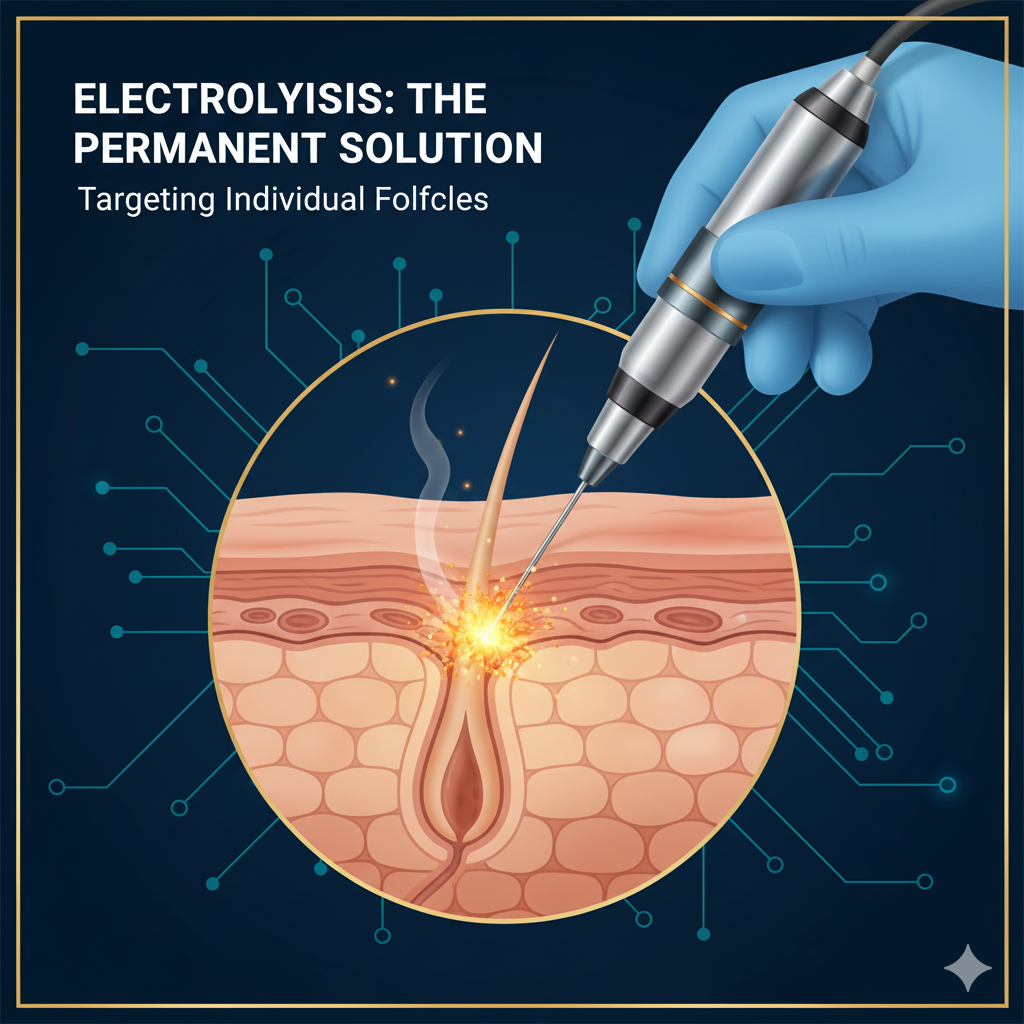
Electrolysis: The Original Permanent Solution
Electrolysis is the only method recognized by the FDA as a truly permanent hair removal solution. It works by destroying each hair follicle individually.
- How it works: A trained electrologist inserts a very fine, needle-like probe into each individual hair follicle. A small electrical current is then delivered through the probe to the base of the follicle, which destroys the hair-producing cells.
- Target: It targets the hair follicle itself, regardless of hair color or skin tone.
- Permanence: Once a hair follicle is treated and successfully destroyed, it cannot grow hair again.
- Time Commitment: Because each hair is treated individually, the process is meticulous and can be very time-consuming, especially for large areas. Multiple sessions are required to catch all hairs as they grow.
Laser Hair Removal: The Modern Speedster
Laser hair removal is a method of permanent hair reduction, recognized by the FDA for its long-term effectiveness. It relies on the principle of selective photothermolysis.
- How it works: A laser device emits a highly concentrated beam of light that is absorbed by the melanin (pigment) in the hair follicle. The light energy is converted into heat, which travels down the hair shaft and damages the hair-producing cells.
- Target: It targets the melanin in the hair. This is why it works best on dark, coarse hair and is less effective on light-colored hair (blonde, grey, white) and red hair.
- Permanence: It provides significant and long-lasting hair reduction. The hair that does grow back is typically much finer, lighter, and sparser.
- Time Commitment: The laser treats a large area with each pulse, making it much faster than electrolysis. A full session on the legs, for example, can be completed in under an hour.
The Ultimate Comparison: Side-by-Side Analysis
1. Effectiveness & Ideal Candidates
- Electrolysis:
- Pro: The only method that works on all hair and skin colors, including blonde, white, grey, and red hair. It is truly permanent once a follicle is destroyed.
- Con: The individual nature of the treatment makes it less practical for large body areas.
- Best For: Individuals with light-colored hair, those seeking permanent removal of a few stubborn hairs, or for shaping eyebrows or hairline.
- Laser Hair Removal:
- Pro: Extremely effective and fast for treating large areas like the legs, back, or bikini line. Provides a significant reduction in hair growth.
- Con: Not effective on light-colored hair because there is no pigment for the laser to target.
- Best For: Individuals with dark hair and a wide range of skin tones (with the right laser technology).
2. Comfort & Sensation
- Electrolysis:
- Sensation: Often described as a stinging or pinching sensation with each hair follicle treated. The intensity can vary, but it is a consistent, sharp sensation.
- Pain Management: Numbing creams can be used to help with discomfort.
- Laser Hair Removal:
- Sensation: The feeling is typically a quick, warm “snap” or a rubber band flicking against the skin with each pulse. With modern cooling systems, the discomfort is brief and often very manageable.
- Pain Management: Integrated cooling systems, cold compresses, and topical numbing creams are used to enhance comfort.
3. Time Commitment
- Electrolysis:
- Sessions: Sessions can range from 15 minutes to over an hour, but you will need a series of sessions to cover all hairs in the treated area.
- Total Time: The total time to achieve permanent results can span several months to a year or more, depending on the area and hair density.
- Laser Hair Removal:
- Sessions: Sessions are much quicker, lasting from a few minutes for a small area to an hour for a large one.
- Total Time: A typical treatment course consists of 6-8 sessions, spaced 4-8 weeks apart, meaning a full treatment cycle can be completed in 6-12 months.
4. Cost
- Electrolysis:
- Cost Structure: Typically priced per session, often by the hour or minute.
- Overall Cost: Can be very expensive for large areas due to the meticulous, time-consuming nature of the treatment.
- Laser Hair Removal:
- Cost Structure: Typically priced per session or as a package for a series of sessions.
- Overall Cost: Generally more affordable than electrolysis for larger areas due to the speed and efficiency of the procedure.
Safety and Side Effects: What to Expect
Both procedures are considered safe when performed by a qualified and experienced professional.
- Electrolysis:
- Risks: Minor irritation, swelling, and redness are common. If performed incorrectly, there is a risk of infection, scarring, or hyperpigmentation.
- Key to Safety: The skill of the electrologist is paramount.
- Laser Hair Removal:
- Risks: Temporary redness, swelling, and a sensation similar to a sunburn are common. More serious side effects like burns, blisters, or pigmentation changes can occur if the wrong laser is used for a skin type, or if a patient has a tan.
- Key to Safety: Choosing a reputable clinic with FDA-cleared technology and a knowledgeable practitioner who will perform a patch test.
The Verdict: How to Make Your Choice
Choosing between electrolysis vs. laser hair removal boils down to a few key questions:
- What is your hair and skin color? If you have light-colored hair (blonde, grey, white) or red hair, electrolysis is your only permanent option. If you have dark hair, laser hair removal is a faster and more efficient choice.
- What body area are you treating? For small, sensitive, or defined areas like the eyebrows, upper lip, or a few stray hairs, electrolysis is the ideal choice. For large areas like the legs, back, or arms, laser hair removal is far more practical and cost-effective.
- What is your goal? If you are seeking absolute, guaranteed permanent removal of every single hair, electrolysis is the gold standard. If you are looking for significant, long-term hair reduction that frees you from daily maintenance, laser hair removal is an excellent and popular choice.
In an ideal scenario, the two methods can even complement each other. Many individuals with dark hair may choose to undergo a series of laser treatments for overall reduction and then use electrolysis to “clean up” any remaining stubborn, lighter hairs.
Ultimately, the best decision is an informed one. Schedule a consultation with both a certified electrologist and a reputable laser hair removal clinic. Discuss your goals, ask about their technology, and get their professional opinion. By doing so, you can confidently choose the path that will lead you to the smooth, beautiful, and hair-free skin you’ve always wanted.
Recent Posts
- The Ultimate Showdown: Electrolysis vs. Laser Hair Removal – Which is the Right Choice for You?
- Your Digital Pathway to Fitness Expertise: The Definitive Guide to Personal Training Certification Online
- Redefining Confidence: Your Comprehensive Guide to Breast Augmentation Houston
- Beyond the Garden State Glow: Your Definitive Guide to Laser Hair Removal in NJ
- San Diego Sunshine: Your Guide to Laser Hair Removal San Diego and Effortless Beach-Ready Skin
Recent Comments
