Unveiling the Truth: Is Laser Hair Removal Safe? A Deep Dive into the Risks and Realities
The promise of a life free from the endless cycle of shaving and waxing is incredibly appealing. Laser hair removal has become one of the most popular cosmetic procedures worldwide, offering a long-term solution to unwanted hair. Yet, before committing to a treatment, a crucial question lingers in the minds of many: is laser hair removal safe?
The short answer, supported by decades of clinical research and millions of successful treatments, is a resounding yes. When performed by a qualified professional using FDA-cleared technology, laser hair removal is widely considered a safe and effective procedure.
However, like any medical or cosmetic treatment, its safety and success hinge on a few critical factors—the expertise of the practitioner, the type of technology used, and the patient’s adherence to pre- and post-treatment protocols. This article will provide a comprehensive and transparent look into the safety of laser hair removal, separating fact from fear and giving you the knowledge you need to make an informed decision.
The Science of Safety: How Lasers Work Without Harming You
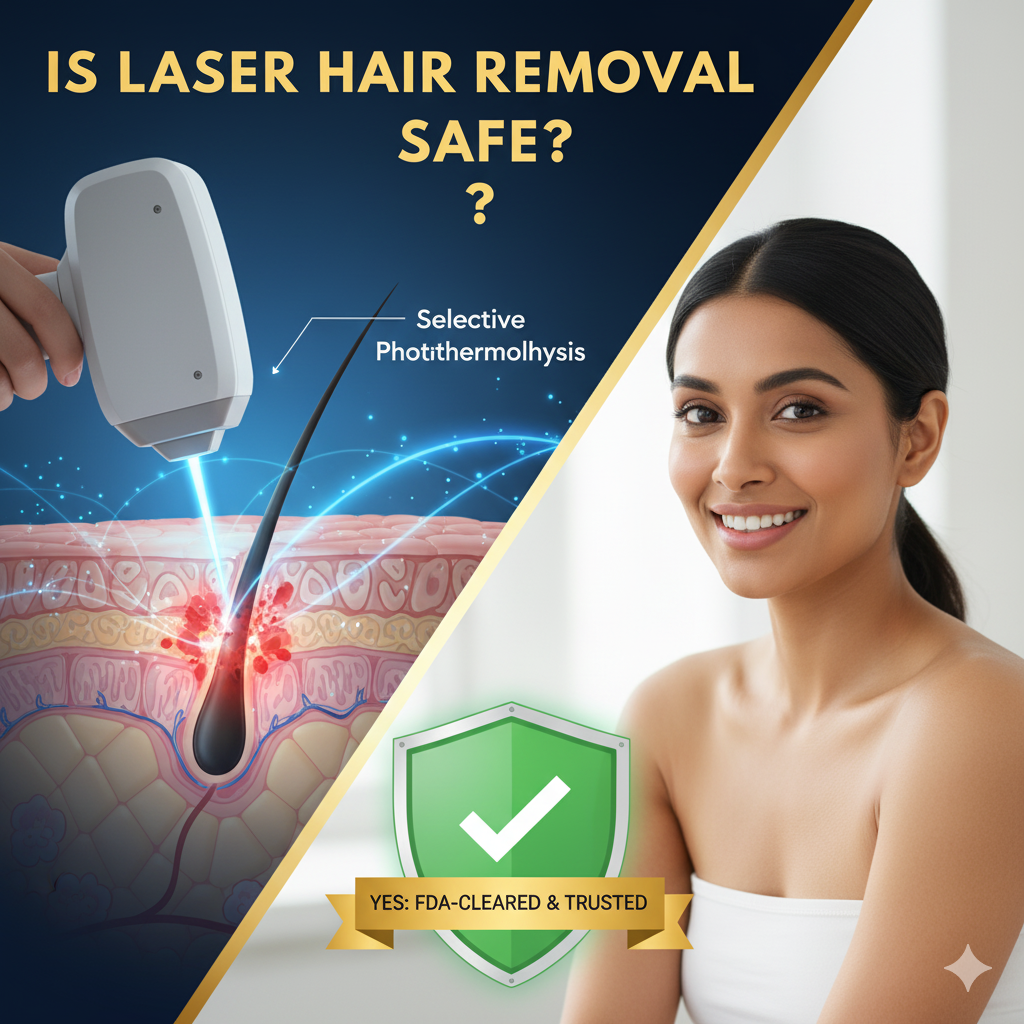
To understand the safety of laser hair removal, you must first grasp the science behind it. The procedure relies on a principle called selective photothermolysis. This is a fancy term for a simple, yet ingenious, concept: a laser can precisely target a specific component in the body without damaging the surrounding tissue.
In the case of hair removal, the target is melanin, the pigment that gives hair its color. When a laser is pulsed over the skin, the light energy is preferentially absorbed by the dark melanin in the hair follicle.
This light energy is instantly converted into heat, which travels down the hair shaft and damages the hair-producing cells within the follicle. The key to its safety lies in the laser’s ability to discriminate: the light is specifically tuned to be absorbed by the melanin in the hair, while leaving the surrounding skin tissue largely untouched.
Furthermore, a common misconception is that laser radiation is a form of ionizing radiation, similar to X-rays, which can cause cancer. This is entirely false. Laser hair removal uses non-ionizing radiation, which means it does not have enough energy to change the molecular structure of cells or cause cellular mutations. The energy simply creates a thermal effect (heat) and dissipates harmlessly.
Understanding Potential Risks and Side Effects
While laser hair removal is safe in the right hands, it’s crucial to be aware of the potential side effects. Most are mild and temporary, but others, though rare, can be more serious if proper precautions aren’t taken.
1. Common, Temporary Side Effects
Immediately following a treatment session, it’s normal to experience:
- Redness and Swelling: The treated area may look and feel like a mild sunburn. This typically subsides within a few hours to a day.
- Mild Discomfort: Some clients report a sensation similar to a rubber band snapping against the skin. This discomfort is temporary and can be managed with cooling gels or devices.
- Follicular Edema: Small, raised bumps may appear around the hair follicles. This is a sign that the treatment was effective and usually resolves within a few hours.
These side effects are a normal part of the process and are not a cause for concern.
2. Less Common, But More Serious Side Effects
These risks are almost always due to improper technique, incorrect laser settings for a specific skin type, or failure to follow pre- and post-care instructions.
- Burns and Blistering: If the laser energy is set too high for a patient’s skin type, it can overheat the skin, leading to painful burns and blisters. This risk is highest on tanned skin.
- Hyperpigmentation (Dark Spots): This occurs when the skin produces excess melanin in response to inflammation from the laser, resulting in dark patches. It is more common in individuals with darker skin tones if the wrong laser (e.g., Alexandrite) is used instead of a suitable one (e.g., Nd:YAG).
- Hypopigmentation (Light Spots): Conversely, the laser can sometimes destroy melanocytes in the skin, leaving lighter patches. This is a rare but more difficult side effect to reverse.
- Scarring: While extremely rare, scarring can occur in the event of a severe burn or blistering, especially if the area is not cared for properly during healing.
3. Extremely Rare Risks
- Eye Injury: The laser light can be extremely damaging to the eyes. This is why both the patient and the practitioner must wear specialized protective eyewear throughout the entire procedure. This risk is 100% preventable.
The Pillars of Safety: What Makes a Treatment Safe?
The question of “is laser hair removal safe?” can be rephrased as “how can I ensure my laser hair removal is safe?” The answer lies in a commitment to three key pillars of safety.
1. The Right Practitioner
This is the single most important factor. Never get a laser treatment from a novice or an uncertified technician. Look for:
- Certification and Training: The technician should have a recognized certification in laser hair removal.
- Medical Supervision: The clinic should operate under the direct supervision of a licensed physician. This ensures that a medical professional is available to consult on complex cases or handle any adverse reactions.
- Experience: An experienced practitioner understands how to properly assess skin type, choose the correct laser, and adjust the settings for a safe and effective treatment.
2. The Right Technology
Not all lasers are created equal, and the best laser for you depends on your specific skin and hair type. Reputable clinics use FDA-cleared devices, such as:
- Alexandrite Lasers: Best for light skin tones (Fitzpatrick I-III) with dark hair.
- Diode Lasers: Effective for a broad range of skin tones (Fitzpatrick I-V).
- Nd:YAG Lasers: The safest and most effective option for individuals with darker skin tones (Fitzpatrick IV-VI) because its longer wavelength bypasses the epidermis and targets the deeper follicle.A qualified practitioner will know which laser is appropriate for you.
3. The Pre-Treatment Consultation
A thorough consultation is not just a formality—it is a critical safety step. During this meeting, a professional will:
- Assess Your Skin and Hair: They will use a Fitzpatrick scale to determine your skin type and assess your hair color and thickness.
- Review Your Medical History: They will ask about medications you are taking (some can cause photosensitivity), skin conditions, and any history of scarring.
- Perform a Patch Test: A patch test on a small, discreet area of skin is an essential step. It allows the technician to confirm the correct laser settings and ensures your skin reacts safely before a full session.
Your Role in Safety: Pre- and Post-Care
Your safety is a partnership. Following the technician’s instructions is just as important as their expertise.
Before Your Session
- Avoid Sun Exposure: Stay out of the sun and tanning beds for at least 4-6 weeks before treatment. Tanned skin is a primary cause of burns and pigmentation changes.
- Shave, Don’t Wax: Shave the treatment area 24 hours before your appointment. The laser needs the hair follicle to be present to work, so waxing, plucking, and electrolysis are strictly forbidden for 4-6 weeks prior.
- Clean Skin: Ensure your skin is clean and free of lotions, creams, deodorants, or makeup.
After Your Session
- Avoid Sun Exposure: This is the most critical post-care instruction. Use a broad-spectrum sunscreen with an SPF of 30 or higher and wear protective clothing on treated areas.
- Avoid Heat: For 24-48 hours, avoid hot showers, saunas, steam rooms, and vigorous exercise, as these can cause irritation to the treated area.
- Gently Care for Your Skin: Use a cool compress to soothe the skin and avoid using any irritating products like exfoliants, retinoids, or AHAs until the skin has fully healed.
The Final Verdict: Safety and Efficacy
So, to return to the original question, is laser hair removal safe? The answer is an emphatic yes, provided you are an ideal candidate and a licensed, experienced professional performs the procedure using appropriate technology.
Laser hair removal has been a trusted and reliable method for permanent hair reduction for decades. When you choose a reputable clinic, get a thorough consultation, and follow all pre- and post-care instructions, you can confidently undergo the treatment with minimal risk and enjoy the transformative results of smooth, hair-free skin. It’s a powerful investment in your confidence and comfort, and with proper due diligence, it’s an incredibly safe one.
Recent Posts
- The Ultimate Showdown: Electrolysis vs. Laser Hair Removal – Which is the Right Choice for You?
- Your Digital Pathway to Fitness Expertise: The Definitive Guide to Personal Training Certification Online
- Redefining Confidence: Your Comprehensive Guide to Breast Augmentation Houston
- Beyond the Garden State Glow: Your Definitive Guide to Laser Hair Removal in NJ
- San Diego Sunshine: Your Guide to Laser Hair Removal San Diego and Effortless Beach-Ready Skin
Recent Comments
